AWS CLI Version 1 Enters Maintenance Mode, Signaling Significant Dependency Management Shifts and Urging Migration to v2

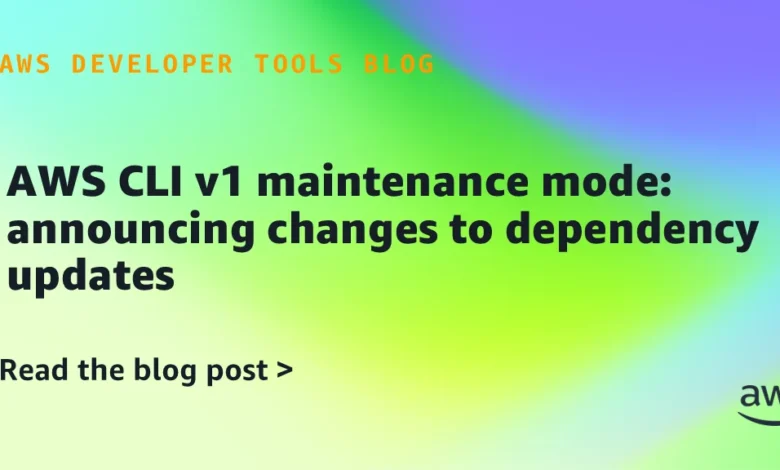
The AWS Command Line Interface (AWS CLI) version 1 is slated to enter maintenance mode on July 15, 2026, a strategic shift that will fundamentally alter how its core dependencies, botocore and s3transfer, are managed. This pivotal transition necessitates a proactive approach from developers and organizations still utilizing AWS CLI v1, as it signals a critical divergence in dependency updates and reinforces the recommendation to migrate to AWS CLI version 2. The impending change, detailed in a recent AWS Developer Tools Blog post, outlines a move towards vendoring these foundational Python libraries directly into the AWS CLI v1 codebase, a departure from their current standalone package model.
This architectural modification means that, post-July 15, 2026, upgrading AWS CLI v1 will no longer automatically update the standalone botocore and s3transfer packages in a user’s environment. Instead, AWS CLI v1 will operate with its own internal, bundled copies of these libraries. While this may offer isolation from potential dependency conflicts with other Python applications like boto3, it also means that AWS CLI v1 will only receive updates to its internal botocore and s3transfer versions when AWS releases a new v1 build—which, under maintenance mode, will be limited to critical bug fixes and security patches. This strategic decision by Amazon Web Services underscores a broader trend in software lifecycle management, aiming to consolidate development efforts on the latest iterations of essential tools.
The Genesis and Evolution of AWS CLI
The AWS Command Line Interface has long stood as a cornerstone tool for developers, system administrators, and DevOps engineers interacting with Amazon Web Services. Launched initially to provide a unified command-line interface for managing AWS services, AWS CLI v1 quickly became indispensable for scripting, automation, and direct interaction with the vast array of AWS offerings. Built predominantly on Python, its design leveraged the flexibility and widespread adoption of the language, particularly through the botocore library, which provides the low-level interface to AWS services, and s3transfer, optimized for efficient Amazon S3 data operations.
AWS CLI v1’s early success stemmed from its open-source nature and its direct mapping to the AWS API, allowing users granular control over their cloud resources. It enabled a programmatic approach to cloud management, moving beyond the console to facilitate infrastructure as code (IaC) principles and automated deployment pipelines. The reliance on external Python packages for botocore and s3transfer provided a degree of modularity and allowed these underlying libraries to be updated independently, benefiting other Python-based AWS tools like boto3, the AWS SDK for Python. However, this modularity also presented challenges, particularly in environments where multiple Python applications required different versions of the same dependencies, leading to what is commonly referred to as "dependency hell."
Recognizing the evolving needs of its developer community and seeking to address some of the inherent complexities of managing Python dependencies, AWS introduced AWS CLI version 2. Released in February 2020, AWS CLI v2 represented a significant architectural leap. Its most notable feature was the inclusion of a bundled Python runtime, eliminating the need for users to manage a separate Python installation or navigate potential conflicts with their system’s Python environment. This self-contained distribution significantly simplified installation and ensured a more consistent, reliable user experience across diverse operating systems. AWS CLI v2 also brought enhanced installers, improved AWS Single Sign-On (SSO) integration, and a richer set of features, positioning it as the future-proof standard for AWS command-line interactions. The introduction of v2 marked the beginning of the end for v1’s active development, setting the stage for its eventual transition into maintenance mode.
A Timeline of Transition: From Active Development to Maintenance
The journey of AWS CLI v1 towards maintenance mode is a deliberate process reflecting standard software lifecycle management. While the initial "CLI v1 Maintenance Mode Announcement" blog post, referred to in the current update, provided earlier notice of this transition, the July 15, 2026, date formalizes the shift. This timeline ensures a substantial grace period for organizations and developers to plan and execute their migration strategies, minimizing disruption to critical workflows.
Prior to the formal announcement of maintenance mode, AWS CLI v1 had already entered a phase of reduced feature development, with most new AWS service features and enhancements primarily targeting AWS CLI v2. This gradual phasing out strategy is common in the software industry, allowing providers to concentrate resources on innovation while still supporting legacy systems for a defined period.
- Initial Release of AWS CLI v1: Early 2013, establishing a foundational tool for AWS management.
- Introduction of AWS CLI v2: February 2020, offering a re-architected, more robust experience with a bundled runtime. This marked the beginning of a strategic shift in AWS’s CLI development focus.
- Initial Maintenance Mode Announcement for AWS CLI v1: An earlier blog post (date not specified in the current content, but implied to be prior to this one) informed users of the upcoming change, initiating the long-term migration push.
- July 15, 2026: AWS CLI v1 officially enters maintenance mode. From this date onward, AWS CLI v1 will only receive updates for critical bug fixes and security issues. It will no longer receive new features, support for new AWS services, or routine dependency updates.
This chronological progression highlights AWS’s commitment to providing a stable, secure, and feature-rich interface while also managing the lifecycle of its tooling. The extended transition period for AWS CLI v1 provides ample opportunity for its vast user base to adapt, ensuring business continuity as they embrace the newer, more capable AWS CLI v2.
Deconstructing the Dependency Management Shift
The core of the upcoming change lies in the modification of how botocore and s3transfer are managed within AWS CLI v1. Understanding this shift is paramount for any developer or system administrator still operating with v1.
Current State (Pre-July 15, 2026):
Currently, AWS CLI v1 functions as a Python package that specifies its dependencies, botocore and s3transfer, as separate, external Python packages. When a user installs or upgrades AWS CLI v1, the Python package manager (like pip) resolves and installs or upgrades these dependencies to specific, compatible versions. This model means that if other Python applications in the same environment—such as custom scripts, serverless functions, or boto3 (the AWS SDK for Python)—also rely on botocore or s3transfer, they might share the same installed versions of these libraries. This shared dependency model can lead to potential conflicts, where one application’s requirement for a specific version of a library clashes with another’s, resulting in what is often termed "dependency hell."
New State (Post-July 15, 2026 – Vendoring):
After July 15, 2026, AWS CLI v1 will adopt a "vendoring" strategy for botocore and s3transfer. Vendoring involves bundling the source code of these dependencies directly into the AWS CLI v1 codebase. Essentially, AWS CLI v1 will no longer rely on external, standalone Python packages for botocore and s3transfer; instead, it will contain its own internal, isolated copies of these libraries.
Key Implications of Vendoring:
- Isolation: The primary benefit of vendoring is isolation. AWS CLI v1 will become self-contained regarding these critical dependencies. This means that its operation will no longer be influenced by the presence or absence of standalone
botocoreors3transferpackages in the user’s Python environment, nor will it conflict with other applications requiring different versions. - No Automatic External Updates: A crucial consequence is that upgrading AWS CLI v1 will not update any standalone
botocoreors3transferpackages installed in the environment. Conversely, installing or upgrading the standalonebotocoreors3transferpackages will have no effect on the versions used by AWS CLI v1. - Version Drift: This creates a potential for version drift. While standalone
botocoreands3transferwill continue to be actively developed and released forboto3(which relies on them), the versions bundled within AWS CLI v1 will only be updated if AWS releases a new v1 version. As AWS CLI v1 will only receive critical bug fixes and security patches post-maintenance mode, its internalbotocoreands3transfercopies are likely to fall behind the latest standalone releases. - Duplication of Libraries: Environments that run both AWS CLI v1 and
boto3(or other Python applications usingbotocore/s3transfer) will now contain two distinct copies of these libraries: one bundled within AWS CLI v1 and the other installed as standalone packages forboto3. This duplication can lead to increased disk space usage and, more importantly, can complicate debugging or troubleshooting scenarios where version discrepancies might be a factor. - Security Patching: Security vulnerabilities discovered in
botocoreors3transferwill be promptly addressed in the standalone packages forboto3. However, these patches will only reach AWS CLI v1 if AWS deems the vulnerability critical enough to warrant a specific v1 release. This could potentially expose v1 users to longer windows of vulnerability if they do not migrate.
Broader Implications for Developers and Enterprises
The transition of AWS CLI v1 into maintenance mode, coupled with its dependency management changes, carries significant implications across various facets of development and operations.
Operational Stability and Complexity:
For environments where AWS CLI v1 is deeply embedded in automation scripts, CI/CD pipelines, or daily operational tasks, the dependency shift introduces a new layer of complexity. The isolation of botocore and s3transfer within v1 might initially seem beneficial for preventing conflicts, but it can create a silent divergence in library versions. Developers might unknowingly be working with an older, less secure, or less feature-rich version of botocore within their v1 CLI, while their boto3 applications leverage a more current version. This disparity can lead to subtle, hard-to-diagnose bugs, especially when interacting with newly released AWS service features or regions that might require newer API specifications present only in updated botocore versions.
Security Posture:
The security implications are particularly salient. While AWS has committed to providing critical security updates for AWS CLI v1 during its maintenance phase, the frequency and scope of these updates will be significantly reduced compared to the active development cycle of boto3 and AWS CLI v2. Any security vulnerability discovered in botocore or s3transfer will be patched rapidly in their standalone versions to protect boto3 users. However, AWS CLI v1 users will have to wait for a specific v1 release, which might occur with a delay or only for the most severe vulnerabilities. This extended exposure window could pose a tangible risk for organizations handling sensitive data or operating in highly regulated environments. Maintaining an older, less frequently updated tool increases the attack surface and demands rigorous monitoring and patching strategies.
Feature Parity and Innovation Lag:
Perhaps the most compelling argument for migration is the inherent innovation lag associated with AWS CLI v1. Post-maintenance mode, v1 will no longer receive support for new AWS services, new regions, or new features within existing services. This means that organizations relying on v1 will progressively lose the ability to manage the latest AWS offerings programmatically. As AWS continues its rapid pace of innovation, developers stuck on v1 will find themselves unable to leverage new capabilities, hindering their ability to adopt modern cloud architectures and optimize their cloud spend. This can translate into a significant competitive disadvantage in a fast-evolving technological landscape.
Resource Allocation and Technical Debt:
Maintaining legacy systems inherently incurs technical debt. For organizations choosing to remain on AWS CLI v1, resources will need to be allocated to manage the risks associated with an unsupported tool: meticulous testing, monitoring for security advisories, and potentially developing workarounds for missing features. This diverts valuable engineering time and budget that could otherwise be invested in developing new functionalities or migrating to more robust, future-proof solutions like AWS CLI v2. The cost of inaction or delayed migration often far outweighs the initial investment required for transition.
Strategic Recommendations and Best Practices
Given the significant changes and implications, AWS has outlined clear recommendations to minimize disruption and ensure a smooth transition for its users. The overarching message is a strong encouragement to migrate to AWS CLI v2.
Prioritize Migration to AWS CLI v2:
This is the most critical recommendation. AWS CLI v2 is the actively developed, fully supported version that will continue to receive new features, service support, and regular updates. The Migration guide for the AWS CLI version 2 (available in the AWS documentation) provides comprehensive instructions and considerations for transitioning existing scripts and automation. Key benefits of migrating include:
- Bundled Runtime: Eliminates Python environment conflicts, simplifying installation and management.
- Enhanced Features: Access to new functionalities like improved AWS SSO integration, better pagination, and more robust output formatting.
- Security and Stability: Continuous updates for security vulnerabilities and bug fixes, ensuring a resilient operational environment.
- Future-Proofing: Guarantees compatibility with new AWS services and features as they are released.
Organizations should conduct a thorough audit of their existing workflows to identify all instances where AWS CLI v1 is used. This includes CI/CD pipelines, local development environments, container images, and serverless functions. A phased migration approach, starting with non-critical applications and gradually moving to core systems, can help manage risk.
Explicit Dependency Pinning (for temporary AWS CLI v1 users):
For environments where immediate migration is not feasible, and boto3 or other Python applications share botocore or s3transfer dependencies with AWS CLI v1, it is crucial to explicitly pin the versions of these standalone packages. This practice ensures that other applications continue to function as expected and are not inadvertently affected by the botocore/s3transfer versions bundled within AWS CLI v1. However, this is a temporary mitigation strategy, not a long-term solution, as it doesn’t address the lack of feature updates or the eventual deprecation of AWS CLI v1.
Thorough Workflow Validation:
Regardless of migration status, all existing scripts and automation that interact with AWS CLI v1 must be rigorously validated after July 15, 2026. The change in dependency management, even if isolated to v1, could expose unforeseen issues in complex environments. Comprehensive testing across development, staging, and production environments is essential to identify and rectify any unexpected behavior or performance degradation.
Monitor AWS CLI Changelogs:
For those who cannot immediately migrate, it becomes imperative to actively monitor the AWS CLI changelog (specifically for v1) to stay informed about any critical bug fixes or security patches. This manual monitoring ensures that any crucial updates to the vendored botocore and s3transfer libraries within AWS CLI v1 are identified and applied promptly. However, relying on this method is resource-intensive and prone to human error, further underscoring the benefits of migrating to v2.
Leverage AWS Support Channels:
AWS encourages users to utilize their standard support contacts or open an issue on GitHub for migration assistance or to provide feedback. These official channels are invaluable resources for addressing specific challenges encountered during the transition and for gaining clarity on complex scenarios.
Official Stance and AWS’s Strategic Intent
AWS’s decision to transition AWS CLI v1 into maintenance mode is a clear articulation of its long-term strategy for developer tooling. While the announcement highlights specific technical changes regarding dependency management, the underlying message from Amazon Web Services is a forward-looking commitment to innovation, security, and a streamlined developer experience.
AWS consistently emphasizes that the introduction and continuous development of AWS CLI v2 are driven by a desire to provide its vast developer community with the most robust, reliable, and future-proof tools available. The bundled runtime in v2 directly addresses common pain points associated with Python dependency management, simplifying the installation and operational aspects for users. By shifting v1 into maintenance mode, AWS is allocating its development resources strategically, focusing on enhancing v2 with new features, improving performance, and ensuring compatibility with the ever-expanding portfolio of AWS services.
The commitment to providing critical bug fixes and security patches for v1 during its maintenance period demonstrates AWS’s dedication to supporting its existing user base through a graceful transition. This approach minimizes immediate disruption while strongly nudging users towards the modern standard. In essence, AWS is communicating that while v1 has served its purpose admirably, the future of command-line interaction with AWS lies firmly with v2, which embodies the latest architectural best practices and offers a superior developer experience. This strategic evolution ensures that AWS continues to empower developers with cutting-edge tools that keep pace with the rapid innovation of cloud computing.
Conclusion
The impending shift of AWS CLI version 1 into maintenance mode on July 15, 2026, marks a significant juncture for the AWS developer ecosystem. The fundamental change in how botocore and s3transfer dependencies are managed, moving from external packages to an internal vendored model, will have tangible impacts on existing workflows and environments. While this architectural modification aims to isolate AWS CLI v1 from external dependency conflicts, it simultaneously introduces new considerations around version management, security patching, and access to new AWS service features.
This transition serves as a strong impetus for organizations and individual developers to critically evaluate their reliance on AWS CLI v1. The long-term stability, enhanced security posture, and access to continuous innovation offered by AWS CLI v2 make a compelling case for migration. Proactive planning, thorough workflow validation, and leveraging the comprehensive migration resources provided by AWS are essential steps to navigate this change successfully. By embracing AWS CLI v2, users can ensure their command-line interactions with AWS remain robust, secure, and aligned with the evolving landscape of cloud technology, thereby future-proofing their cloud operations and unlocking the full potential of Amazon Web Services.
Related posts: